


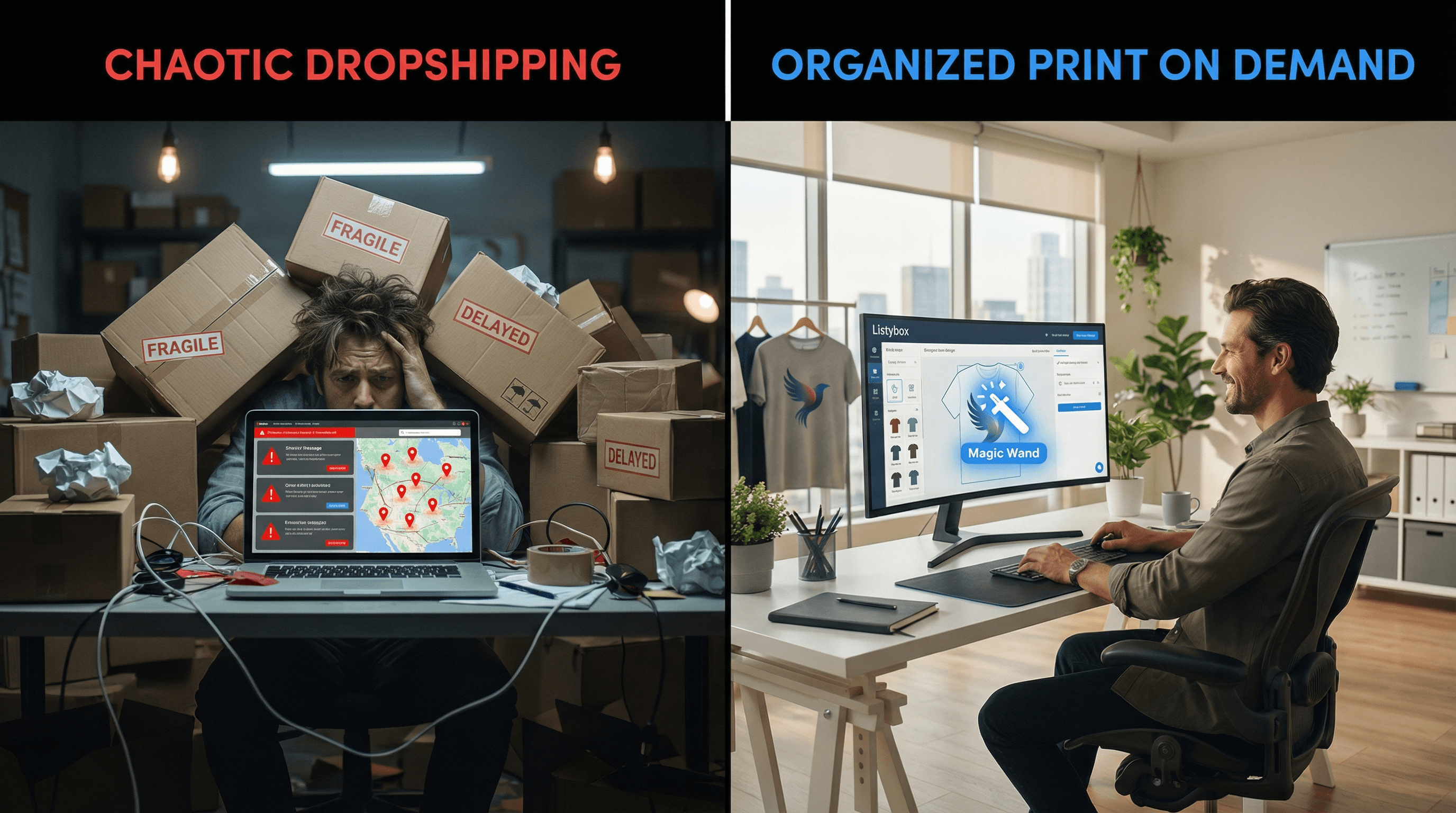
Starting an e-commerce business is often presented as a choice between two giants: Dropshipping and Print on Demand (POD). For the uninitiated, they might look identical - both allow you to sell products without holding inventory. However, for an aspiring entrepreneur looking to build a long-term asset rather than a temporary hustle, the difference is night and day.
One path offers a race to the bottom with generic products and constant quality anxiety. The other offers the chance to build a beloved brand with loyal customers. Understanding the mechanics, risks, and automation potential of each is crucial before you launch your first listing.
The Core Distinction: Commodity vs. Creation
To make an informed decision, we must first strip away the buzzwords. What exactly are you selling?
What is Generic Dropshipping? In the traditional dropshipping model, you act as a middleman for existing products. You find a supplier (often on AliExpress or Temu) selling a generic item - say, a galaxy projector - and you list it on your store. When you get a sale, the supplier ships that exact same lamp to your customer.
What is Print on Demand (POD)? POD is technically a form of dropshipping because you don’t hold inventory. However, the product does not exist until you sell it. You upload your unique design to a “blank” product (like a t-shirt or mug). When a customer buys it, a provider prints your artwork onto the item and ships it. You are selling your creativity, not just a commodity.
The “Hidden Trap” of Generic Dropshipping
The allure of generic dropshipping is the low barrier to entry, but this is also its greatest danger. Because you are selling the same product as thousands of other sellers, you have zero brand defense. You are forced to compete solely on price.
Even worse is the quality control nightmare. You never see the product. A customer might receive a broken item or something that looks nothing like the photo, shipped in a beat-up packet with Chinese characters, arriving 4 weeks late.
Our analysis of Etsy forums indicates that stores relying on generic dropshipping face a 3x higher rate of “Not as Described” cases compared to POD stores. This puts your payment account in reserve and risks a permanent ban. This constant stress of “putting out fires” is why many dropshippers burn out within 6 months.
Why POD is the Superior Model for Etsy
Etsy is a marketplace for “Handmade, Vintage, and Craft Supplies.” Generic dropshipping explicitly violates Etsy’s spirit and often its terms of service. Print on Demand, however, is fully embraced because you are the designer.
Building a Brand, Not a Hustle With POD, every product carries your unique signature. You aren’t selling a “white mug”; you are selling a “Funny Cat Mom Mug” that speaks directly to a specific audience. This creates emotional connection and loyalty.
Visual Authority In generic dropshipping, you are often stuck with the supplier’s low-quality stock photos. In POD, you control the visual narrative. Using ListyStyle mockup creator, you can instantly generate hundreds of professional, hyper-realistic photos of your custom product in real-world scenes. This allows you to charge premium prices because your brand looks professional and trustworthy.
Automating the Workload: The “Zero-Touch” Reality
A common myth is that POD requires more work than dropshipping. Critics argue that managing designs and providers is complex. This was true five years ago, but today, automation has leveled the playing field.
The Old Way (Manual POD) Without software, POD can be tedious. You have to manually upload designs to a printer, select products, and when an order comes in, manually copy the customer’s address to the printer’s site. It is slow and prone to human error.
The Listybox Way (Automated POD) We built Listybox to remove this friction. With Zero-Touch Order Management, the system acts as your personal Operations Director.
When a sale occurs on Etsy, Listybox detects it, routes it to the best fulfilling partner, and handles the tracking upload automatically. You don’t lift a finger. This creates a true “passive” income stream, allowing you to focus on creating new designs rather than data entry.
A Tale of Two Sellers: A Real-World Scenario
To illustrate the difference, let’s look at two hypothetical scenarios involving a new entrepreneur, “Leo”.
Leo, The Dropshipper
The Persona: Leo wants to quit his 9-5. He watches a YouTube guru and decides to dropship generic sunglasses.
The Goal: Sell 50 pairs a week.
The Grind: He spends weeks finding a supplier. He lists the glasses using the supplier’s blurry photos.
The Hidden Trap: He gets 10 orders! But the supplier runs out of stock without telling him. Then, 5 customers email asking where their package is. One customer uploads a photo of the glasses broken in pieces. Leo spends his evenings fighting disputes. His Etsy store gets suspended for “non-delivery.”
The Result: Leo quits, frustrated and out of pocket.
Leo, The Listybox POD Seller
The Persona: Leo resets. He decides to try POD with his own typographic slogans.
The Goal: Build a clothing brand for coffee lovers.
The Solve: He uses the Magic Wand SEO tool to identify high-traffic keywords in the coffee niche. He uploads his designs to the multi-product Creation Wizard, instantly generating t-shirts, hoodies, and mugs.
The Transformation: He publishes 200 listings in one Sunday afternoon. When orders start rolling in, Zero-Touch Fulfillment handles the shipping. Leo wakes up to notification sounds, not customer complaints. He has built a sustainable business that runs itself.
Profitability and Risk Management
The final argument for generic dropshipping is usually “cheaper prices.” It is true; a generic shirt might cost $5, while a high-quality POD shirt costs $9. However, you can sell the generic shirt for $15 (competing with everyone), but you can sell the unique POD shirt for $25+.
Furthermore, Listybox secures your margins with our Lowest Price Guarantee. By leveraging the collective buying power of our entire user base, we negotiate production costs that are often lower than what you could get on your own, ensuring your POD business is not just brand-safe, but financially robust.
Start Your POD Journey the Right Way
Understanding the difference is only the first step. The technical setup of a store can still be daunting for beginners.
Does all of this feel overwhelming? You don’t have to start from scratch. With Listybox Store Setup, our expert team sets up your Etsy store, lists your first 10 products, and optimizes everything for SEO. This service is included FREE with annual Starter and Professional plans!
Dropshipping offers a quick buck with high risk. Print on Demand offers a lasting business. With the right automation tools, the choice becomes obvious.
Start your free trial - no credit card required and build a brand you can be proud of.
Put this into practice in your shop.
Every step from design to live listing, on one platform. Start on the free plan.
No credit card required.
Related posts
Want to go deeper? Read our in-depth Etsy guides · Browse 100 Etsy niche guides